Author: admin

  • Survey of Freedom 28 Sailing Yacht

    Survey of Freedom 28 Sailing Yacht

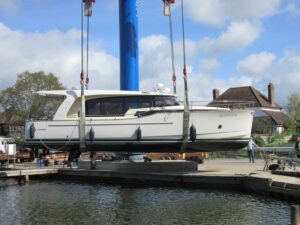
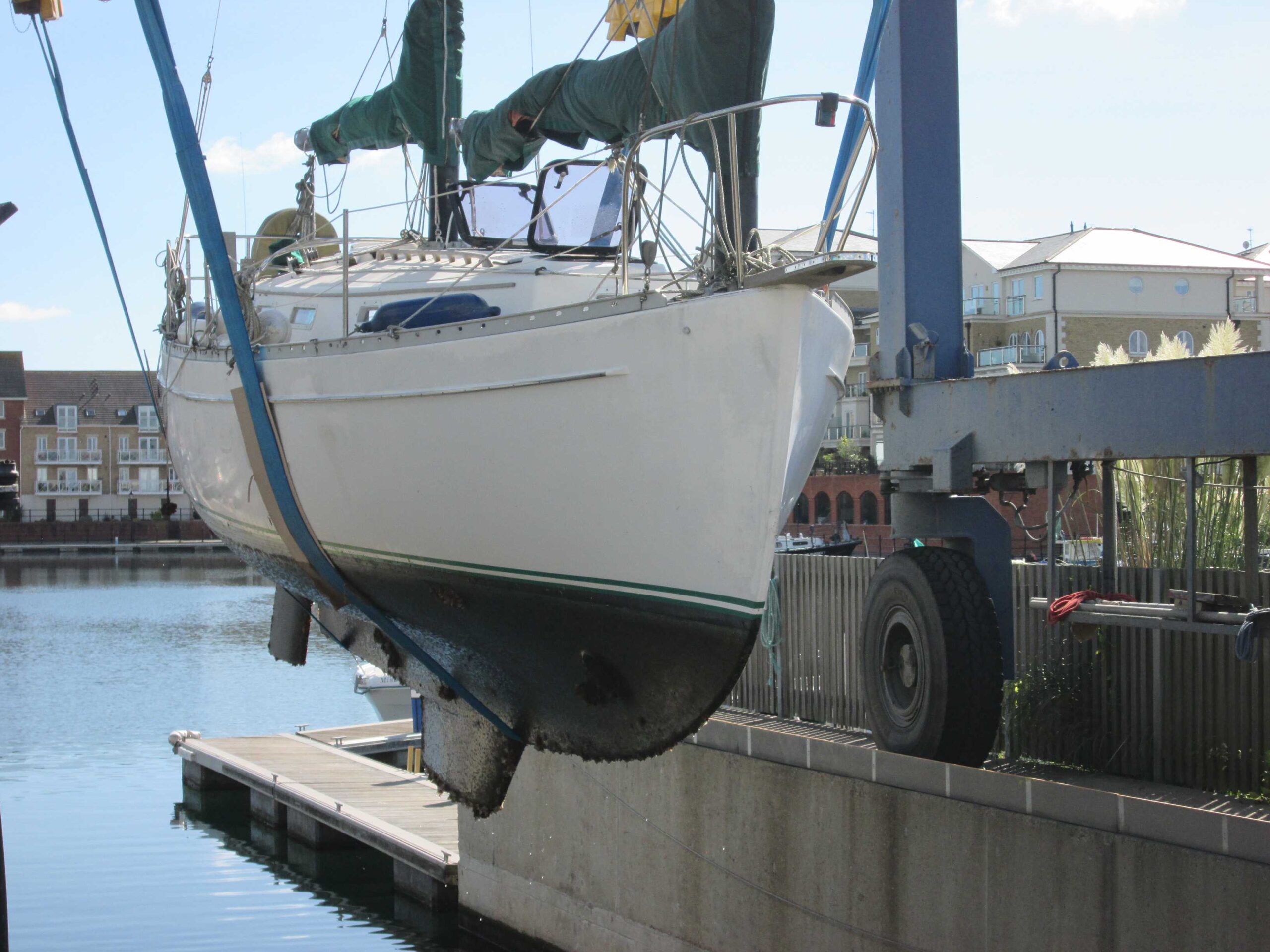
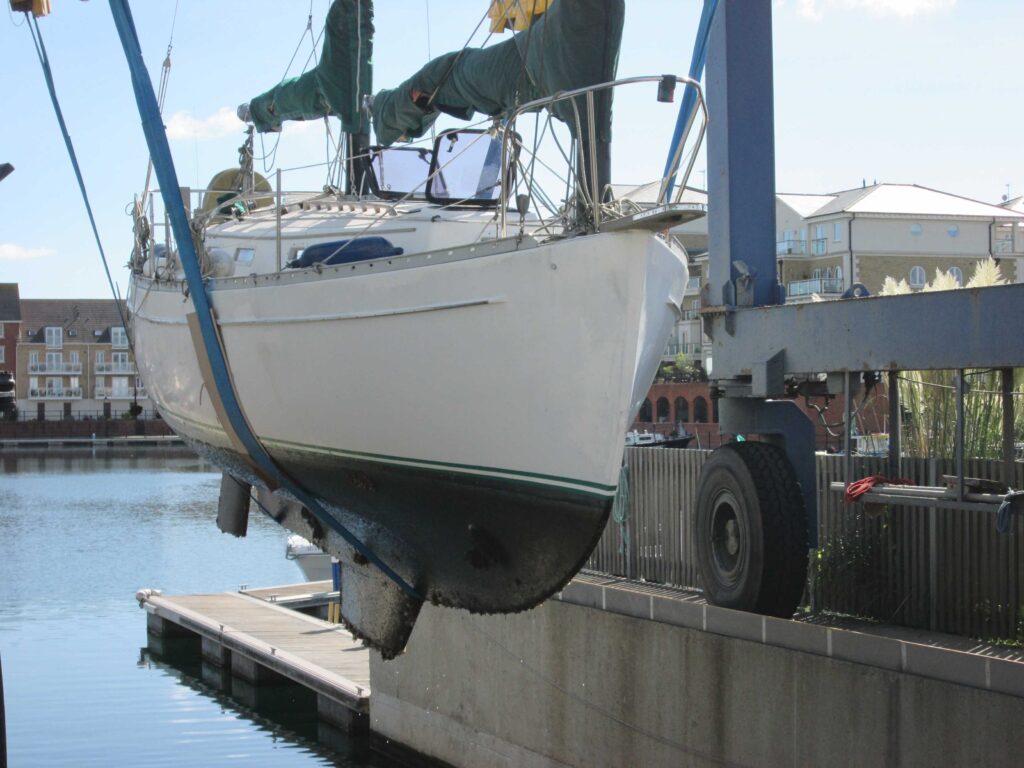
    Freedom 28 in the lifting slings at Premier Marina, Eastbourne, England

    The Freedom 28 sailing yacht was built by Tillotson-Pearson of Rhode Island, USA. The free-standing ketch rig is comprised of two unstayed masts, made of carbon fibre. On this version the booms were of the more usual extruded aluminium, connected to the mast via goosenecks that are bonded to the carbon fibre masts. This rig is lower in maintenance that the usual stayed masts, with no expensive wires to replace. The sail plan is easy to handle and reasonably efficient, but with the long keel, she may not sail to windward as well as many fin-keeled yachts of similar size. This version had the shoal keel option, with a lead centre plate.

    This Freedom 28 sailing yacht was recently surveyed at the Sovereign Harbour Marina, Eastbourne, England. The hull of the Freedom is of sandwich construction, with an end-grain balsa wood layer sandwiched between the inner and outer layers of GRP. The balsa core is present both above and below the waterline, but only extends downwards as far as the side of the keel. The Builder sensibly ensured that any skin fittings were only located in regions that were free of any balsa core material, ensuring that no water can enter the core via the cut-outs of the skin fittings. One of the most important areas where the surveyor has to take great care is to look for any additional skin fittings or anode studs that might have subsequently been fastened through the hull: If these were cut straight through the balsa core, there is a significant risk that moisture might penetrate the balsa, resulting in a rotten core. This can lead to a significant loss of strength & stiffness in the hull and the cost of rectifying this can be very significant.
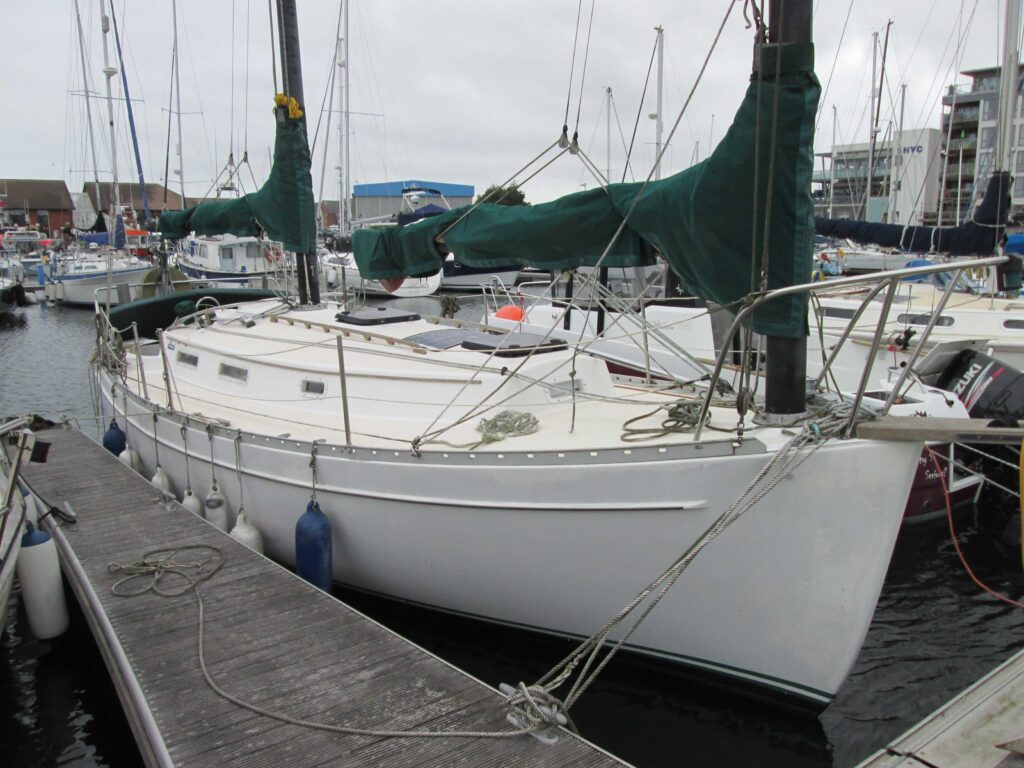
    On this Freedom 28, the Masts were carbon fibre and the booms were made from aluminium
  • Poorly Maintained Gas System on a Yacht

    Here is an example of a poorly maintained Gas System on a yacht. The photograph below shows a poor method for terminating an unused gas pipe on a 29′ motor sailing yacht that I inspected recently.

    Gas System on a Yacht

    The vessel used to be fitted with a gas-powered cabin heater, but the heater unit had been removed at some time in the vessel’s life. The gas supply pipe had been partially removed, but only up to the nearby isolation valve. The valve was then held in the closed position by a short length of steel wire.

    • When I find a poorly installed or poorly maintained gas system on a yacht, I will always recommend that the system is overhauled or serviced by a  qualified person listed on the gas safety register. See http://www.gassaferegister.co.uk for further details.
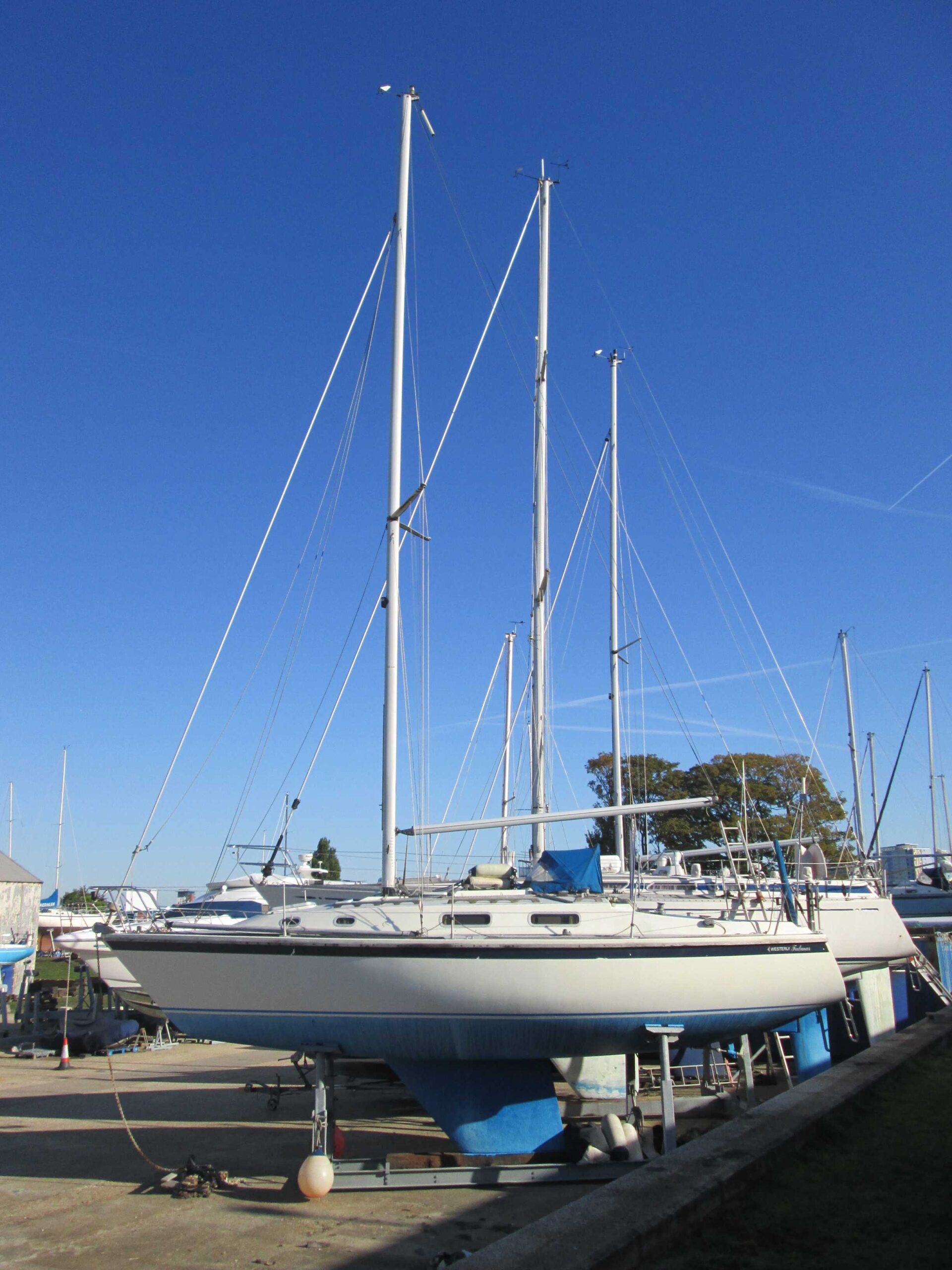
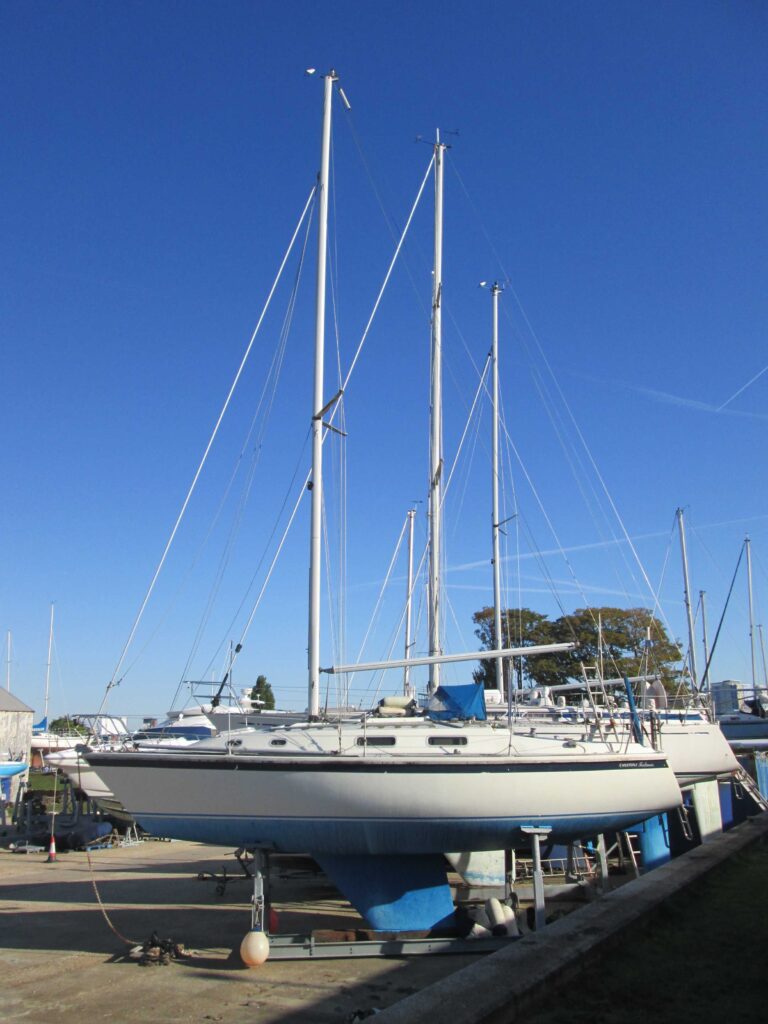
  • Survey of a Westerly Fulmar

    Survey of a Westerly Fulmar

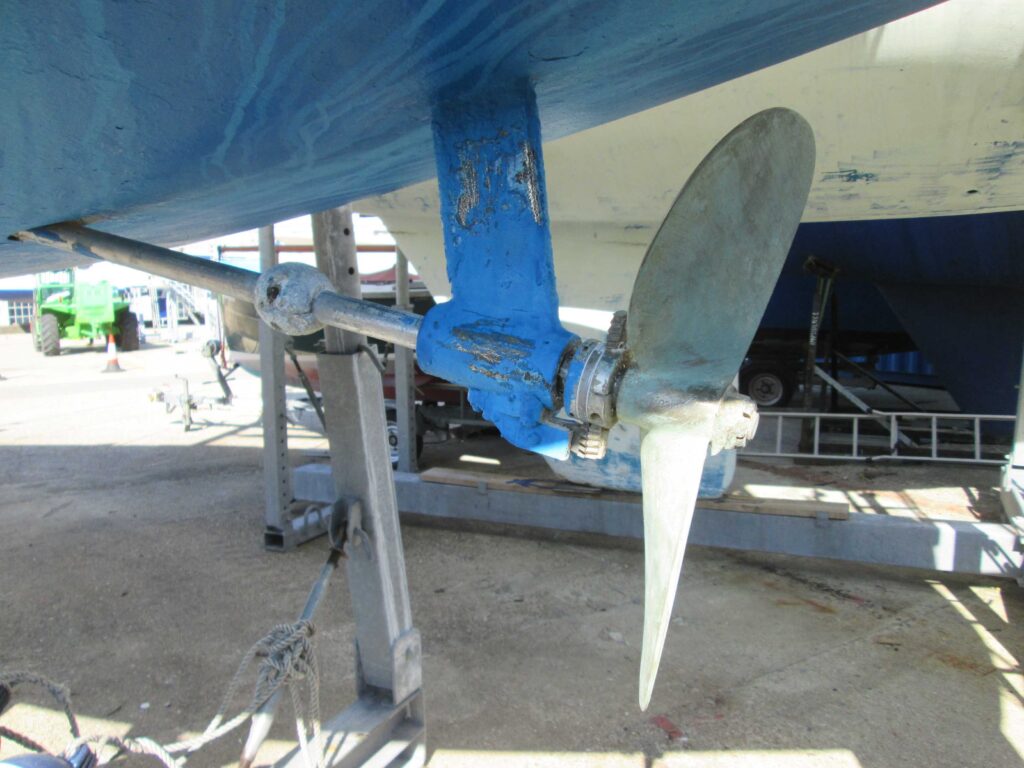
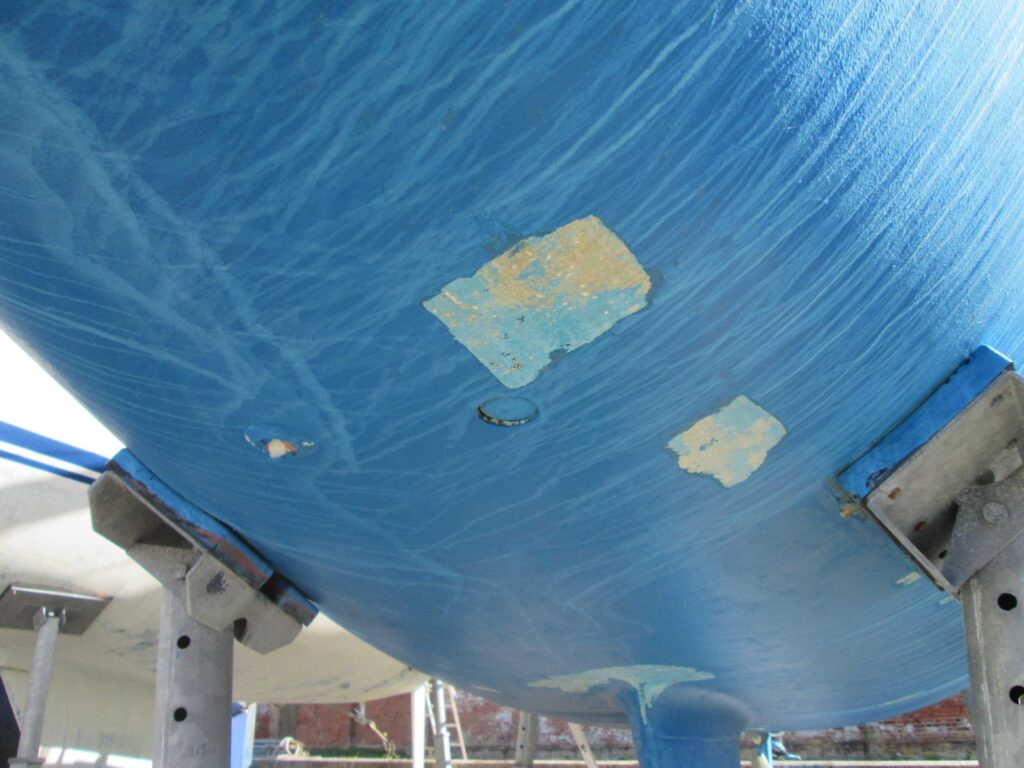
    The pre-purchase survey of this 1987 Westerly Fulmar 32 recently took place in Gosport, Hampshire, with the vessel ashore for the majority of the survey. The boat yard wouldn’t allow me to run the engine whilst the boat was in her cradle, so once the boat had been lifted into the water, I returned on a second occasion to run the engine. With the vessel afloat, this provided me with the opportunity to assess the condition of the engine whilst it was running in gear and under load, something which can’t be done with the vessel ashore.

    Pre-purchase Survey of a Westerly Fulmar

    The Westerly Fulmar 32 was designed by Ed Dubois and was launched in 1980 to replace the 31’ Westerlys that were designed by Laurent Giles, such as the Berwick, Longbow, Pentland and Renown. Strictly matched Fulmars were raced between 1985 and 1987 in the prestigious Royal Lymington Cup match racing series, but they were also very popular with sea schools and for family cruising.

    The accomodation of the Fulmar was claimed to be a 7-berth, but the port side quarter berth is more like an extra-wide single berth, therefore the boat is more suited to a maximum of six persons.

    The Fulmar was built in respectable numbers for over ten years, until 1992 when it was extended & modified to include a small bathing platform (usually called a sugar scoop), becoming the Fulmar 33. In total, 435 of the 32’ Fulmars were built and 18 of the 33’ Fulmar.

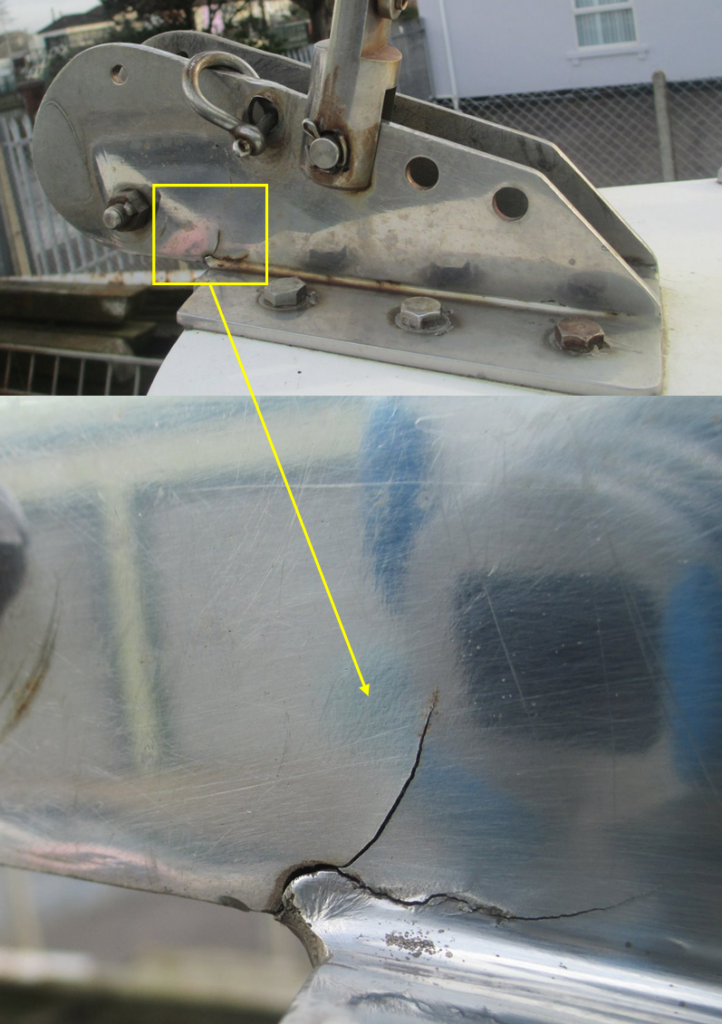
  • Check the bow roller for cracks

    The damage of the bow roller shown in the photograph above was found during an Insurance Survey of a 1976 Westerly Berwick, a British built, masthead rigged sailing yacht with cast iron bilge keels.

    During the inspection of the rigging chain plates it was found that there were a number of well developed cracks in the two vertical plates that support the bow roller. The photographs show the two cracks on the port side plate. This plate also supported the forestay, therefore the security of the entire rig depended on the strength and integrity of this plate. In consideration of the observation that similar cracks were found on each of the vertical plates, it is likely that these cracks were predominantly due to cyclical loading from the vessel’s mooring chain whilst she was on her summer mooring. The cracks on the port side plate may also be due to cyclical athwartships loading from the jib when she is sailing. There was no evidence to suggest that these cracks have occurred as a result of an impact with an object.

    The report recommended that the bow roller fabrication was repaired in order to return strength to the two plates. As this repair would have involved welding, the entire fabrication would have to be removed from the foredeck as the heat generated would have damaged the GRP deck.

    Cracks in Forestay Chain Plate Fabrication
  • Water Trap in Gas Locker Drain

    Thankfully I don’t come across this defect very often. It is probably something that many owners would never notice as everything looks as though it is in good order. Having said this, the hose in this photo of a gas locker drain should be of the reinforced type. Also, two hose clips should be used if the skin fitting allows this.

    It isn’t entirely clear from the photograph, but the gas locker drain hose from the boat’s gas locker has a bend in it that can trap water. If water were to enter the locker, it would find its way into the hose where a small amount would be trapped. Similarly, when the boat is healed over on a close-haul, seawater could easily enter this drain. Until the water is able to evaporate, the locker drain will effectively be blocked. This would prevent any leaked gas from escaping harmlessly overboard. Cooking gas or LPG is a very ‘searching’ gas and will seep through gaps that might normally be airtight. On this vessel, it would have entered the aft heads and then into the bilge, with potentially devastating consequences.

    This simple but important defect was discovered on a standard Insurance Survey on a 33′ sailing yacht. Owners are usually reluctant to have these surveys done as it is often considered that the report is purely for the benefit of the Insurance Company. The above example clearly shows that the vessel’s owner can gain significantly from having a thorough survey performed on their craft, even if they think that they know their boat inside-out.

    Yacht Survey, Gas Locker Drain
    Gas Locker Drain Hose with Water Trap in U-bend
  • Perished Fuel Filler Cap Seal

    Diesel or Petrol fuel filler caps are often located on an exposed area of horizontal deck or cockpit floor, particularly on sailing yachts. I recently performed a pre-purchase survey on a Nauticat Pilothouse Ketch, located at Woolverstone Marina, Ipswich. The image below shows the perished Fuel Filler Cap Seal of the starboard fuel tank of this motor-sailer. Note that the nitrile rubber has aged & hardened, resulting in numerous circumferential cracks in the O-ring, each one allowing moisture into the fuel tank. Additionally, the part of the fitting that was set into the deck was poorly designed, allowing sea water, rain water or dew to collect in the rebate that runs around the opening hole.

    Prior to the discovery of the degraded fuel filler cap seal and during the survey of the rest of the vessel’s fuel system, I had carefully inspected the glass-bowled primary fuel filter of each fuel tank. I noted that the colour of the liquid inside the starboard tank filter suggested that there may be water in the tank.

    These were the recommendations made in the report:

    1. It was found that the primary fuel filter for the starboard fuel tank had a layer of water at the bottom of the glass bowl. It is RECOMMENDED that any water in the bowls is tapped off from the primary filters for both fuel tanks. The fuel tanks should also be drained off and the contents checked for water contamination.

    2. The two fuel tanks are refuelled via separate filler caps located on the port and starboard side decks. They were appropriately labelled with the text ‘diesel’. It was found that the O-ring seals that seal the filler caps were heavily perished. It is RECOMMENDED that the filler cap O-ring seals are replaced.

    The new owner of the Nauticat was able to drain off two buckets of water from the starboard tank! He was lucky that there was no evidence of diesel fuel fungal growth in the tank as disel fuel with a high moisture content tends to encourage their growth.

    Fuel filler cap seal on sailing yacht
    Typical deck-mounted fuel filler cap
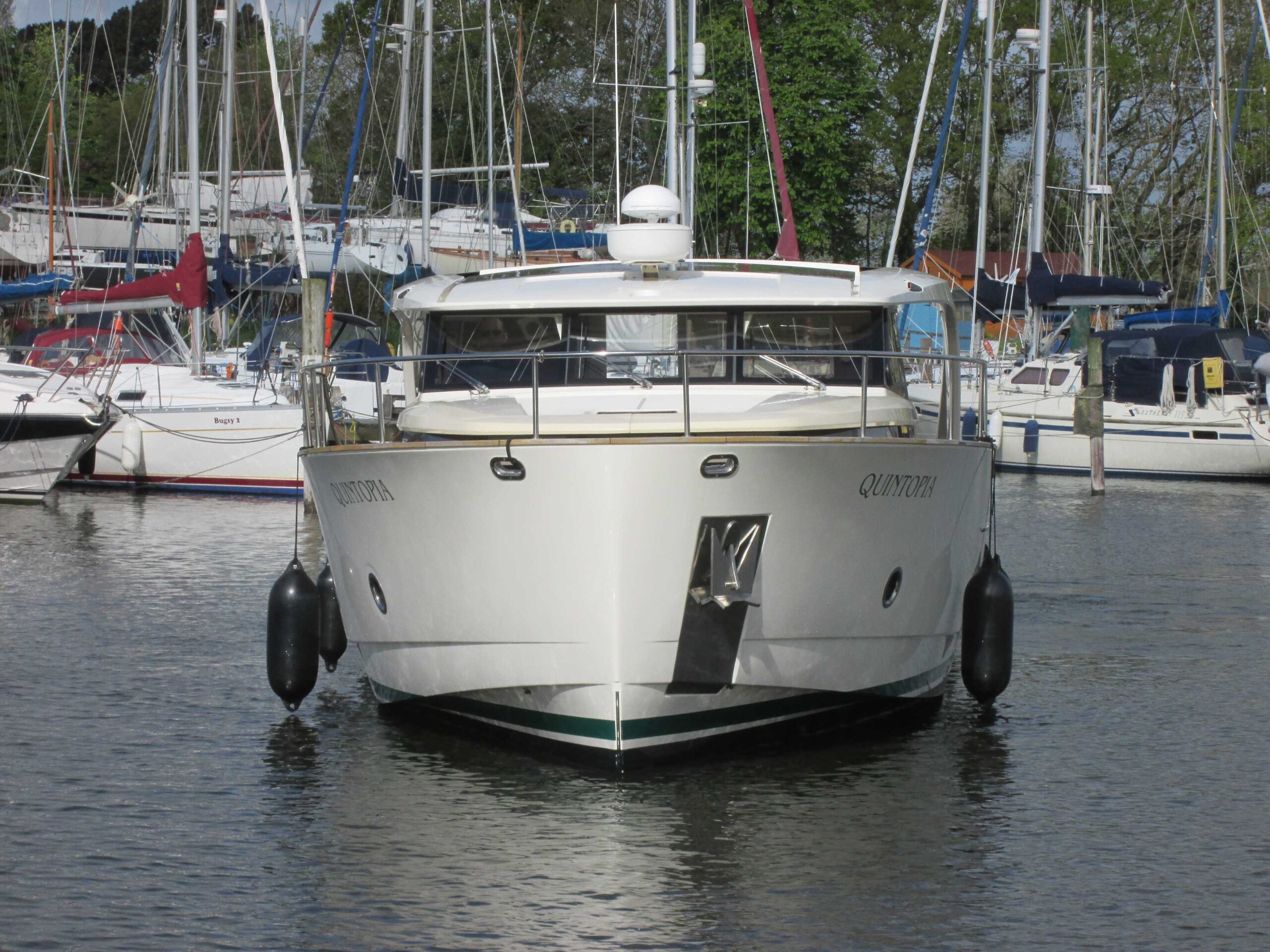
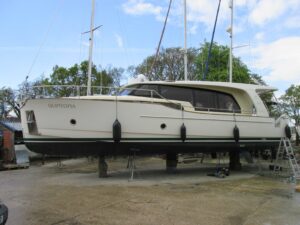
  • Pre-purchase Survey of Greenline 40 Yacht

    Pre-purchase Survey of Greenline 40 Yacht

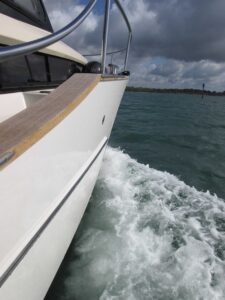
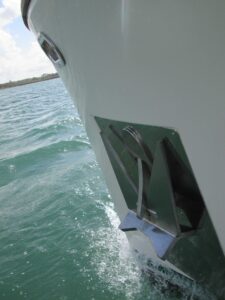
    This 2013 Greenline Yachts 40′ was surveyed over a two day period. The first day of the pre-purchase survey included a sea trial in Chichester Harbour and The Solent. The second day was spent at Birdham Pool Marina, with the vessel lifted ashore. Although the boat was only five years old, there was still as much to inspect as an older boat. She had been well looked after, so not as many defects as some similar aged boats that I’ve inspected.

  • Pre-purchase Survey of Hallberg Rassy 49

    Introduction to the Hallberg Rassy 49, designed by Enderlein & Rassy

    The pre-purchase survey of this boat took place over a period of two and a half days. The sea trial  allowed a more thorough check of the engine & drivetrain than if the engine was simply run whilst ashore. Following the sea trial, a sample of engine oil was taken and sent away for chemical analysis.

    The pre-purchase survey of this boat took place over a period of two and a half days. The sea trial  allowed a more thorough check of the engine & drivetrain than if the engine was simply run whilst ashore. Following the sea trial, a sample of engine oil was taken and sent away for chemical analysis.

    A vessel of this size and complexity often has quite a number of skin fittings (through-hull fittings). This particular boat had over 30, many of which were located below the waterline. Some of these were fitted with old, unreinforced hoses and many valves were corroded or very stiff. Recommendations for the replacement of these were made in the report.

    Climbing the mast of a Hallberg Rassy

    The very last task of the survey was to climb the rigging. Although there was ice on the mast, making my hands sore & numb, I was able to identify a number of fine cracks on the stainless steel hardware that secured the cap shrouds to the mast head. Whether the new owner wished to take her ocean cruising or simply use her for weekend cruising, he was glad to know that these defects had ben found in good time and could be repaired before a more costly and dangerous failure occurred.

    If you’re interested in seeing examples of survey reports of similar sailing yachts, click here.